As my final year at Villanova University rapidly approaches, my emotions are beginning to run high. It feels like it was just yesterday that I was graduating from high school and it is hard to believe that in just a short year from now, I will be finished college and out in the real world. Speaking on behalf of myself as well as all incoming college seniors, there are two major concerns that can bring about great fear in regards to life after graduation. Those fears are of course, “Will I get a job after college?” and “Will I ever be able to pay off my college debt?”
When researching the statistics on student loan debt, I know first-hand that the findings can be overwhelming and frightening. See table below. Pennsylvania is pretty high on this list!
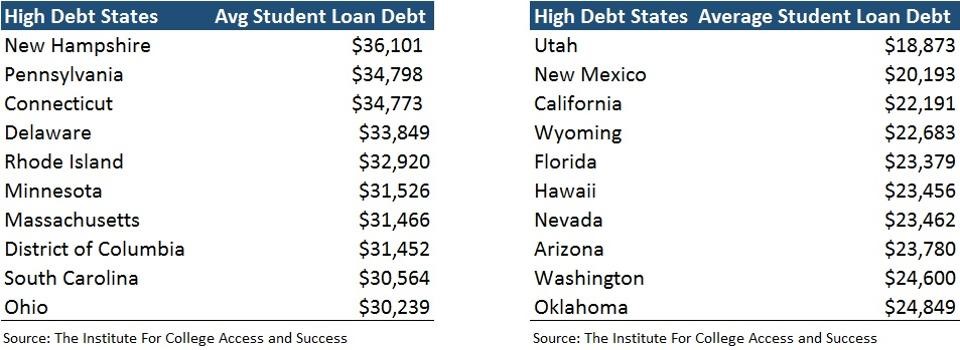
However, I have come to realize that it depends on what we make of these findings that will dictate our future success in the real world. It is inevitable that students with debt are going to be more likely to fall behind on saving for retirement compared to peers with no debt. But what can really be said about this fact? If you were fortunate enough to have your parents or scholarships fund your education, great. However, if you are like me and have had to borrow some of the money to help pay for college or if you have had to pay for your education entirely on your own, it is essential that you do not panic and do not let the research get you down. There are still a few important things working in your favor.
First off, it is essential that you focus on the positives in the situation and think of the big picture. Obtaining a college degree, right off the bat, gives you an incredible advantage in the working world. Those with an advanced degree also earn more, on average, than those with a bachelor’s degree so never rule out the idea of furthering your education in graduate school.
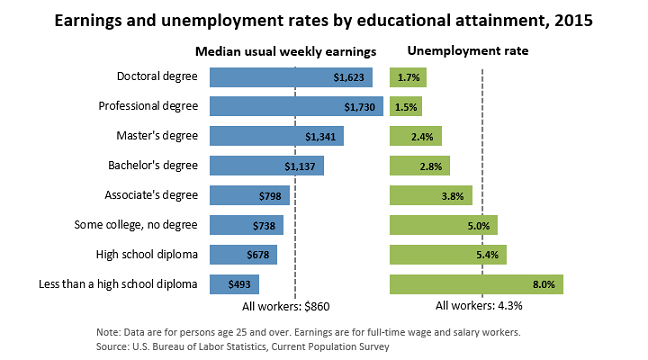
Although it only means more potential debt, it will benefit you greatly in the long run. So basically, it is important to view your education as your first big investment in your life. Doing this will allow you to see that the sacrifice you made financially will turn into higher income over your lifetime, which will translate into greater financial security for you and your family in the future.
My second and final piece of advice as a college student entering his final year is that we must focus on what we can control. Picturing ourselves drowning in student debt loans will only lead to more fear and anxiety. Instead, we must educate ourselves on the types of college saving plans that are available today and realize that the situation is not as bad as it seems and that it is indeed controllable. This goes for both parents and students; it is never too early to start saving. If you are preparing to attend college, first take into consideration your interests and your aspirations in life after college and compare that to the costs of each school you are deciding between. For instance, don’t spend top dollar on a degree in theater, because realistically the risk- reward scenario will not deliver higher pay in the working world. Remember to be honest with yourself and enter college with open eyes and an open mind. Also, consider minoring in a field that will translate to a job after college if your primary field of study does not work out.
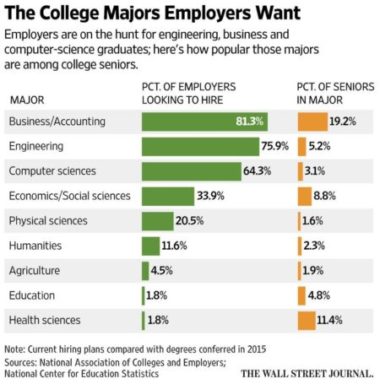
In conclusion, my point is to inform you to never limit yourself when it comes to your education just because you are afraid of the accumulation of student loan debts. As long as you take your education seriously and do your absolute best in class, you will reap the benefits of landing a steady job and will someday see your debt disappear and achieve financial security. Higher education will also lead to greater mobility and financial success. Although it may be more difficult for some to take on more debt, it will inevitably turn out to be the best investment you make in your life.
-Matthew Brown


